
How to Choose a Contractor for a Kitchen or Bathroom Remodel
This guide is for any homeowner planning a kitchen or bathroom remodel, wherever you live and whoever you hire. It covers the checks that protect you before you sign anything.
By Avi Saslow, DYS Construction AZ · Published · Last updated
Check the License Yourself
- Many states license contractors at the state level. In others, licensing is handled by the city or county. Search for “[your state] contractor license lookup” and use the official government website.
- Look up the company by name or license number. Check that the license is active, that it covers the kind of work you need, and whether complaints are on record.
- The name on the license should match the name on the contract.
- In Arizona, where we work, the lookup is at roc.az.gov.
Ask for Proof of Insurance
- Ask for a certificate of liability insurance, and ask that the contractor's insurance agent send it to you directly.
- Ask who will do the work, employees or subcontractors, and how they are covered if someone is hurt in your home. The rules differ from state to state.
Get the Scope in Writing Before You Compare Prices
Two prices mean little until the two scopes match. A written scope should say:
- What is removed and who hauls it away.
- What is installed, with the material named or a dollar allowance for each item you have not chosen yet.
- Who orders the materials and who is responsible if something arrives wrong.
- Who handles permits and inspections.
- What is not included.
The lowest price is often the shortest list.
What a Remodel Costs: A Reference Point
Prices change with where you live, the size of the room and the materials you pick, so no single number fits every home. As a reference point, these are the ranges we publish for our own projects in the Scottsdale, Arizona area in 2026. They are for complete projects by a licensed contractor, not single repairs.
Kitchen
- $20,000 to $40,000. The layout stays where it is, with new surfaces, hardware and lighting.
- $40,000 to $75,000. Some layout change, such as a new or resized island, upgraded appliances and the electrical work they need. Most projects land here.
- $75,000 to $120,000. A full gut renovation with a new layout and custom cabinetry.
Bathroom
- $10,000–$17,000. New finishes, tile, tub or shower, vanity and fixtures in the same locations. No layout changes and no moving plumbing.
- $17,000–$25,000. Moving the shower, toilet or vanity, tub to shower conversions, and higher grade materials.
- $25,000–$35,000+. Custom work, a large walk in shower, a freestanding tub, floor to ceiling tile, and new lighting and plumbing layout.
Prices in your area may be higher or lower. Compare the quotes you get with each other first. Then use ranges like these to notice a quote that sits far outside the pattern, then ask the contractor what explains the difference. The full breakdowns are in our kitchen cost guide and our bathroom cost guide.
Look at the Payment Schedule
- Look for a reasonable deposit, then payments tied to finished stages of work, and a final payment after you have walked the finished job.
- Be careful with anyone who wants most of the money before work starts, or who takes cash only.
- Some states limit how large a deposit can be. Your state's consumer protection office can tell you.
- Pay in a way that leaves a record, and keep a receipt for every payment.
See Real Work and Talk to Past Clients
- Ask for photos of the contractor's own finished projects that are similar to yours.
- Ask for two or three past clients you can call. Ask them whether the job finished when promised, whether the price changed and why, and how problems were handled.
- Read reviews for patterns, not stars. How a company answers a fair complaint tells you how it will treat you.
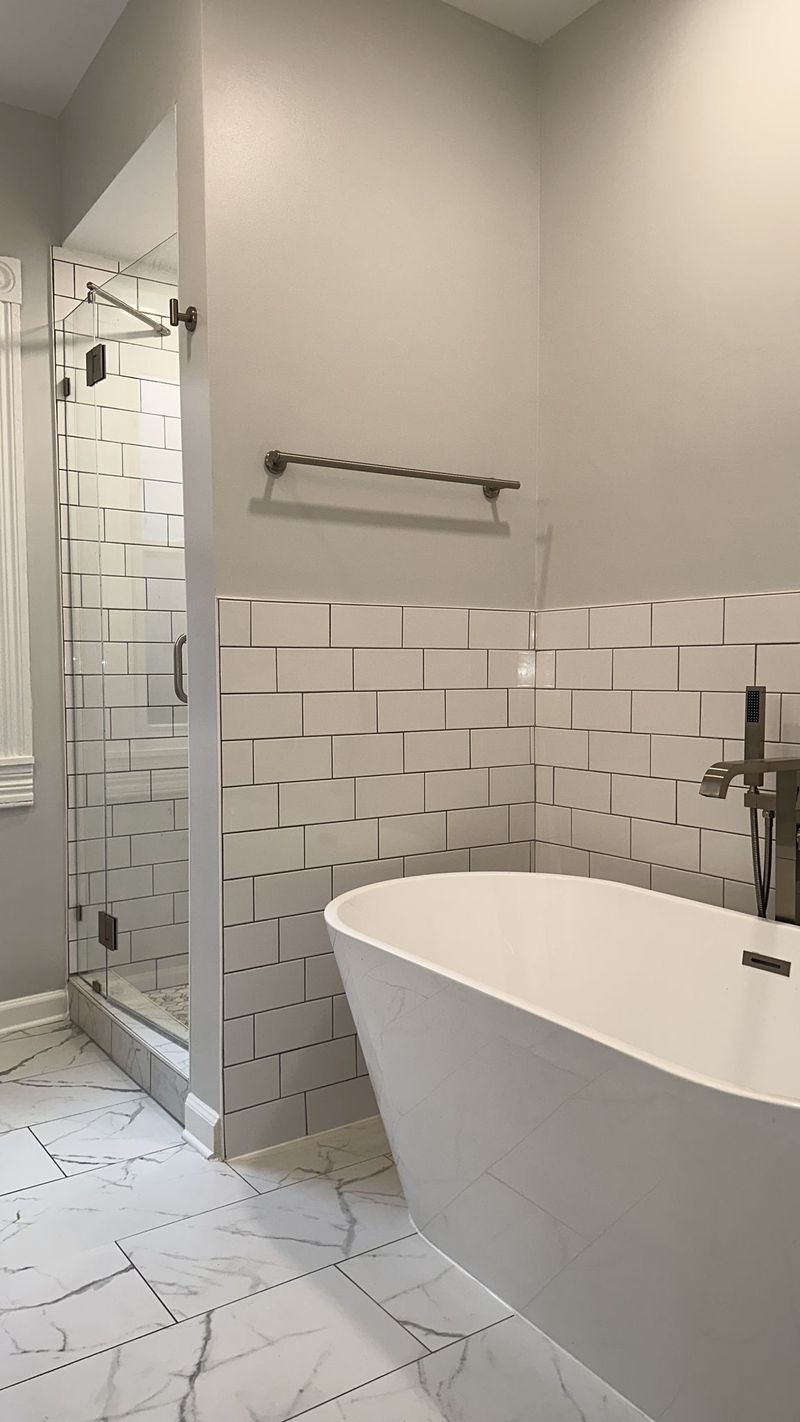
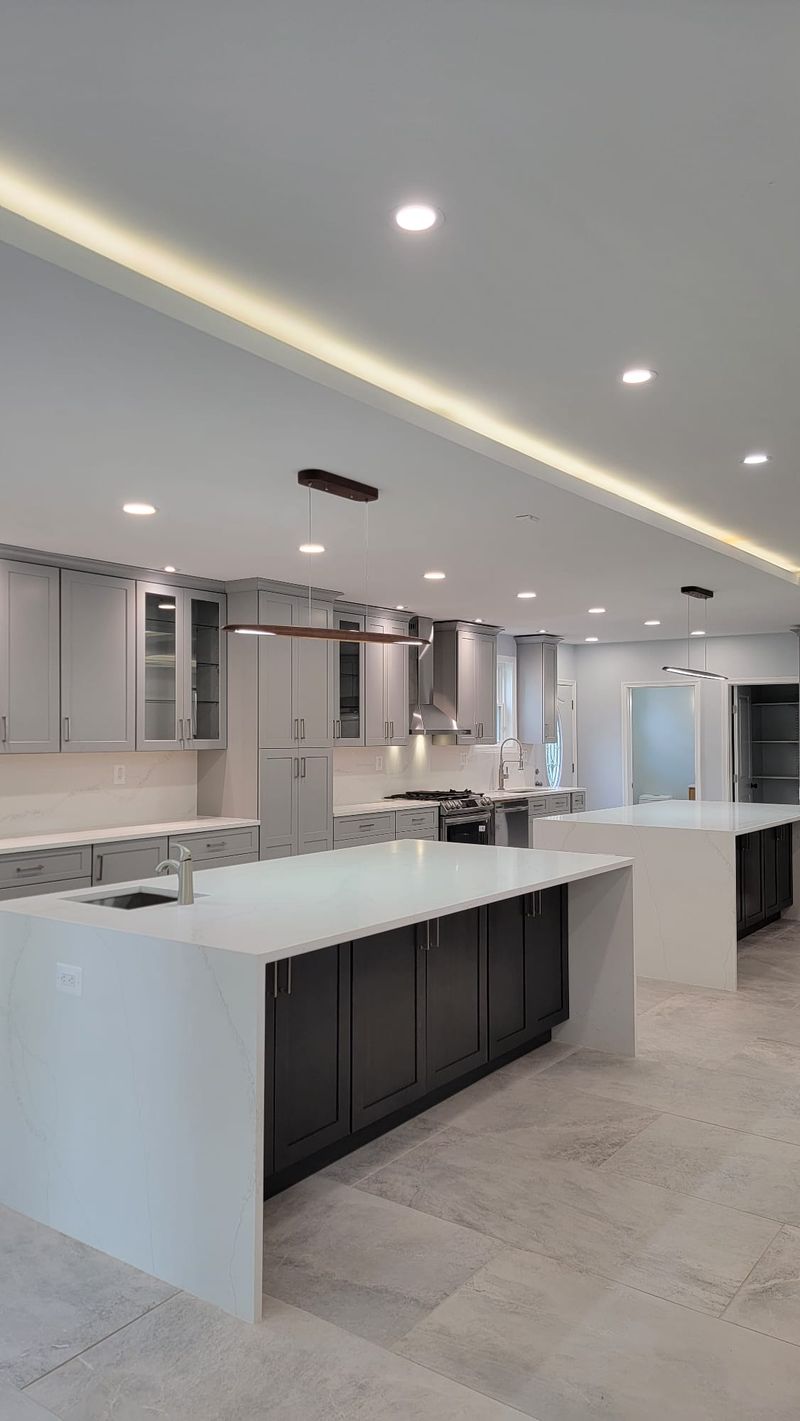
From our own projects: a bathroom with a freestanding tub beside a separate glass enclosed walk-in shower, and a kitchen with two islands. See more in our portfolio.
Know Who Will Be in Your Home
Ask who is on the job every day, who your contact is, and how quickly they answer. The person who sells the job is not always the person who builds it.
Agree on Timeline and Changes
- Ask for a start date and an expected length, and ask what has to be ordered before demolition. Cabinets and countertops often set the real schedule.
- Every change should be written down with its price before the work is done.
Get the Warranty in Writing
Ask how long the workmanship is covered, what is covered, and who you call if something fails.
Red Flags
- Pressure to sign today, or a price that is “only good today.”
- A price far below the others with a vague scope.
- Cash only, or most of the money up front.
- No written contract, or no license number on it.
Questions to Ask Every Contractor
- What is your license number, and what name is it under?
- Can your insurance agent send me a certificate?
- Who will be on my job every day?
- What exactly is included, and what is not?
- Which materials are in the price, and what is the allowance for each?
- Who handles permits?
- What is the payment schedule?
- When can you start, and how long will it take?
- How do you handle a change, or a surprise behind the wall?
- What is the warranty, in writing?
- Can I talk to two past clients?
Ask the same questions of two or three contractors and compare the written answers. Clear answers matter more than the lowest number.
About This Guide
Written by DYS Construction AZ, an owner-operated, licensed remodeling contractor (AZ ROC 361781) based in Scottsdale, AZ. We wrote it so that homeowners outside our area still leave with something useful.
If your home is in the Phoenix metro area, we would be glad to help: call (480) 772-0164 or use our contact page. Wherever you are, we hope your remodel goes well.
Know someone remodeling in the Phoenix area? Feel free to pass our name along.