
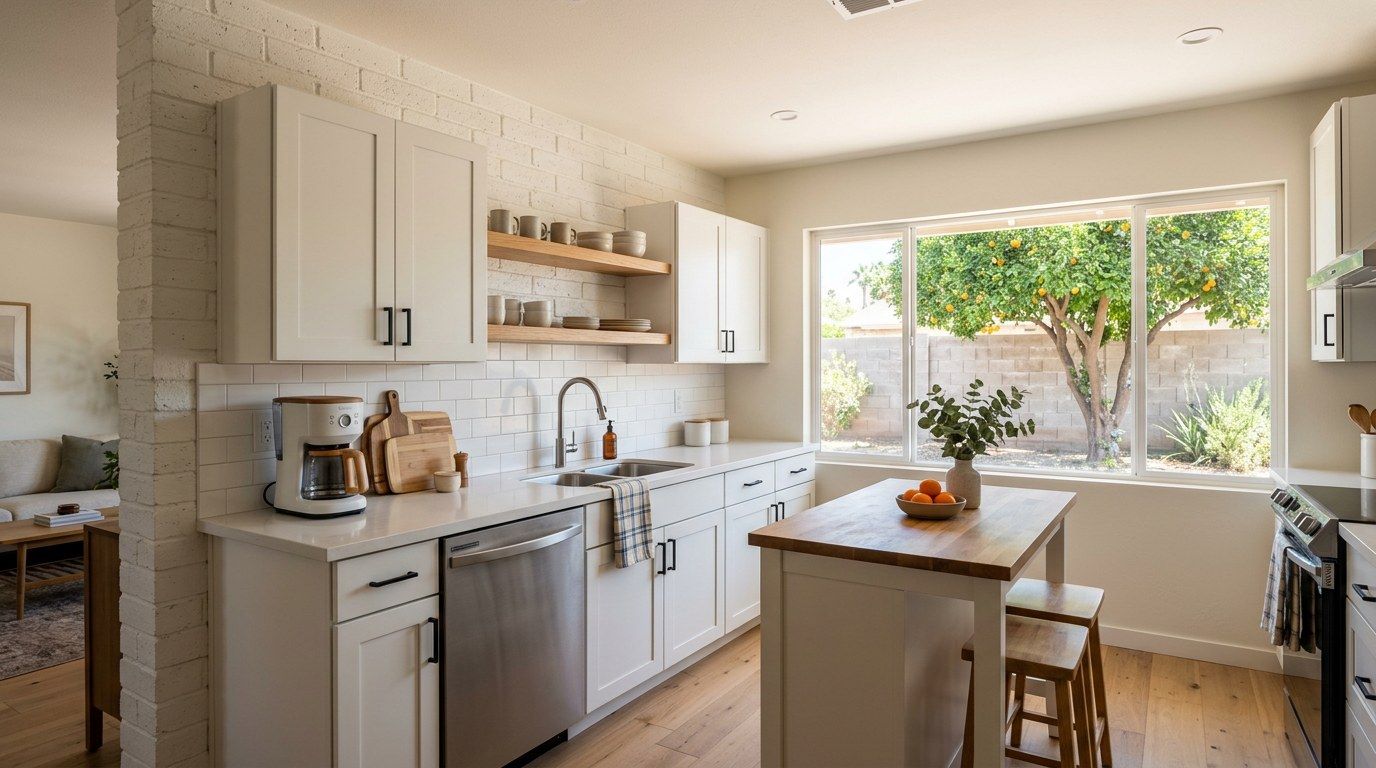
Phoenix, Arizona
Home Remodeling in Phoenix, AZ
Respectful renovations for historic bungalows, mid century moderns, and the Valley's established neighborhoods.
Preserving
Character.
No design fee. No in-home sales pitch. Submit a form Monday–Friday before 2 PM Arizona time and we'll call you back the same business day. Otherwise, you'll hear from us the next business day.
Phoenix is the central hub of the Valley, holding decades of architectural history. From the irrigated lots of Arcadia to the historic districts of Central Phoenix and the newer infill builds, the homes here have distinct identities.
Remodeling in Phoenix calls for a property specific approach. Depending on the home's age and location, planning may include evaluating existing systems, checking zoning or historic district requirements, and improving function without erasing the character that drew the homeowner there.
What Makes Remodeling in Phoenix Different
Three things we check early, because they shape layout, scope and schedule. Conditions vary from home to home.
Slab foundations
Many Phoenix homes sit on a concrete slab. Where a drain, tub or toilet needs to move, the work may involve cutting and patching the slab, and that depends on the existing construction. We look at the house before we promise a layout.
Older supply and drain lines
Depending on age, a home may still have galvanized steel supply pipes, which can corrode and restrict flow, or cast iron drains, which can crack or scale over decades. We check what is behind the wall before a plan is finalized.
Hard Valley water
Valley water leaves mineral deposits on glass, fixtures and grout. Material choices made early, such as finishes that hide spotting and easy to clean glass, affect how the room looks years later.
Infrastructure Upgrades
In an older home, electrical, plumbing, HVAC, insulation, and the building envelope should be assessed before finishes are selected. That early review helps reveal which improvements belong in the same scope.
Strategic Additions
An attached addition or detached casita starts with the property itself: available space, access, utilities, setbacks, and the way a new structure would relate to the existing home.
Phoenix Homes by Era
What usually changes in a remodel depends on when the house was built. These are general patterns, not a rule for any one home.
Late 1930s to about 1950
Pre war and transitional homes can have older framing, small rooms and original plumbing. Work often begins with opening a wall to see what is there, and decisions about keeping character come before finish selections.
1950s and 1960s
Post war concrete block ranch homes on a slab are common. Typical projects include opening closed kitchens, enlarging small bathrooms and replacing aging supply or drain lines, where the slab shapes what can move.
Later block and stucco homes
Later construction tends to need updated layouts, wiring, finishes and showers. Condition varies, so each home is assessed on its own rather than by decade.
Newer master planned areas
In communities such as Ahwatukee and Desert Ridge, homes are more recent and projects usually focus on layout, surfaces and outdoor connection. Many of these neighborhoods also have an HOA with its own approval steps.
Permits and Historic Districts in Phoenix
Applications, plan review and inspections for residential work go through the City of Phoenix SHAPE PHX portal, and the residential building page explains the process. Relocating valves, pipes or fixtures and replacing whole sheets of drywall generally need a permit. The city also publishes a list of work exemptions, which generally covers things like painting and replacing a fixture in the same location. Requirements depend on the scope, and when a permit is needed we pull and manage it. Work that is exempt from a permit must still comply with applicable requirements.
Historic review is a separate track from a building permit. Exterior alterations to properties with local historic preservation zoning generally require Historic Preservation Office review; routine maintenance has exceptions. Interior only work that does not affect the exterior does not require HPO review, but may still need a building or plumbing permit. The city's historic preservation FAQ covers the details. Check the property's actual designation rather than assuming a neighborhood name establishes its status.
A Phoenix Project
One of our Phoenix projects turned a sunken wet bar into a wet bar framed up to floor level, with a new powder room and walk in closet built back to back in the reclaimed space.
See the wet bar, powder room and closet project“Avi was so easy to communicate with and kept us in the loop every step of the way, especially when they had to take the room down to the studs to repair the old floor framing.”
Our Core Disciplines
Kitchens
Cabinetry, surfaces, layouts, and project coordination for elevated culinary spaces.
Bathrooms
Layout, waterproofing, custom tile, and premium fixtures for sophisticated retreats.
Whole Home
Cohesive planning and execution for connected spaces and complete home transformations.
Also see walk in and curbless showers, casitas, and how our process works.
Phoenix Neighborhoods
General descriptions of areas we serve, not a list of completed projects.
- Arcadia
- Known for larger irrigated lots near the Camelback Mountain corridor, with a mix of mid century ranches and newer rebuilds.
- Biltmore
- The area around the Arizona Biltmore, with a range of mid century and later homes.
- North Central
- A long established corridor of Phoenix with homes built across many decades.
- Moon Valley
- A foothill area in north Phoenix where lots and terrain vary from home to home.
- Ahwatukee
- A master planned community in south Phoenix, with homes of more recent construction.
- Desert Ridge
- A master planned area in northeast Phoenix, with newer homes and community guidelines.
- Phoenix historic districts
- Phoenix has locally designated historic districts, including Willo, Encanto Palmcroft, Coronado and Roosevelt, where exterior changes are reviewed.
Phoenix Remodeling FAQs
Start Your Phoenix Project
Speak with our team to discuss your goals, explore possibilities, and understand what it takes to transform your home.
No design fee. No in-home sales pitch. Submit a form Monday–Friday before 2 PM Arizona time and we'll call you back the same business day. Otherwise, you'll hear from us the next business day.
Tell us about your project
No design fee. No in-home sales pitch.